

It’s 2024. Why are women still facing pregnancy-related workplace discrimination?
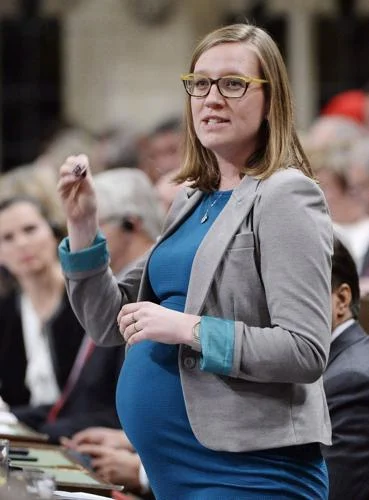
Image source: Burlington MP and Government House Leader Karina Gould is the first federal cabinet minister in history to take a maternity leave. The discriminatory attitudes associated with being on “the mommy track” are common, frequent and destructive, Nicole Biros-Bolton and Medora Uppal write. Adrian Wyld The Canadian Press file photo
This article was originally published in The Hamilton Spectator
While it’s tempting to believe that,
in 2024, women no longer face discrimination related to pregnancy and
parental leave, the reality is that it is a continuing part of our
employment experience.
Unfortunately, the discriminatory attitudes associated with being on “the mommy track” are common, frequent and destructive.
Ed Canning’s recent column (Pregnancy sinks career, Jan. 6) outlines a stark reality: Women and pregnant people continue to face pervasive barriers in the workplace.
As leaders in
organizations dedicated to serving women and gender-diverse individuals,
we are gravely concerned that the case Mr. Canning described — which
saw a woman laid off after her parental leave while the person who
replaced her kept their job — creates a dangerous legal precedent. It
sets the stage for women to have to fight harder to retain the same
level of employment before and after their pregnancy — and, as a result,
maintain their economic power and security.
Legally,
the area related to cases pertaining to pregnancy and parental rights
is called sex and family status discrimination — a complex and evolving
area of law in Canada. The duty to accommodate employees is foundational
in the fight against family status discrimination, ensuring that
individuals are not disadvantaged due to pregnancy, parental leave, or
taking time away from work to care for other family members — another
essential role that is most frequently filled by women.
The
Ontario Human Rights Commission highlights the Human Rights Code’s
protections against discrimination on the basis of sex (pregnancy) and
family status, laying out guidelines for both employees and employers:
“as a person with family status needs: Tell your employer, union,
landlord, or service provider what your family status-related needs are,
with supporting information as needed, and help explore possible
solutions.”
“As an
employer, union, landlord or service provider: Accept requests for
accommodation in good faith. Ask only for needed information, and keep
this information confidential. Find a solution as quickly as possible,
and in many situations — cover the costs, including any expert opinion
or documents needed.”
Another important
element outlined in Ontario’s Human Rights Code is that “family status”
is defined as “being in a parent and child relationship.” The
commission notes that this definition is broad, encompassing not only
relationships based on blood or adoption but also those formed through
“care, responsibility, and commitment.” This includes traditional
parenting roles, as well as situations like caring for aging parents or
families led by two spirit and LGBTQIA-plus individuals.
Family
status and sex discrimination is deeply rooted in gender inequality.
The legal remedies women can receive after facing discrimination often
don’t fully compensate for the emotional and financial toll experienced
in the workplace — experiences that can so often be minimized or brushed
aside.
In a climate
where women’s reproductive rights are being challenged, and in some
jurisdictions, stripped away, it’s hard not to notice the bleak reality
that women can be forced into carrying pregnancies they don’t want, only
to be professionally penalized. We must also recognize that parental
leave and caregiving responsibilities — which are crucial roles in our
society — remain one of the main contributors to the gender pay gap.
The
solution lies in a more just legal system that recognizes the real
impact of parental discrimination, and offers women the remedies they
need and are entitled to. By understanding these legal frameworks and
actively pushing for change, we can work toward a more equitable
workplace for all.
Nicole Biros-Bolton
is the chair of LEAF Hamilton (Women’s Legal Education and Action
Fund). Medora Uppal is the CEO of YWCA Hamilton.